
RIA Water Damage Restoration in White Plains: A Homeowner’s Guide
RIA certification, short for the Restoration Industry Association, is the binding standard your insurance adjuster uses to measure drying protocol. In White Plains, hiring an RIA-certified crew means the difference between a claim that gets paid and one that gets kicked back for “incomplete documentation.” Here’s how that plays out on the job site, not just on a website.
What RIA Certification Actually Requires on a Job Site
Most people think RIA certification is a wall badge. It’s not. RIA certification for Water Damage Restoration in White Plains means the crew follows a documented drying protocol that an adjuster can audit line by line. Here’s what that looks like when our crews arrive at a house in Gedney Farms or Highlands:
- Documented drying goals. Before any equipment gets plugged in, we write down the target moisture content for every affected material. Drywall, hardwood, subfloor, baseboards. Each gets a number, not a guess.
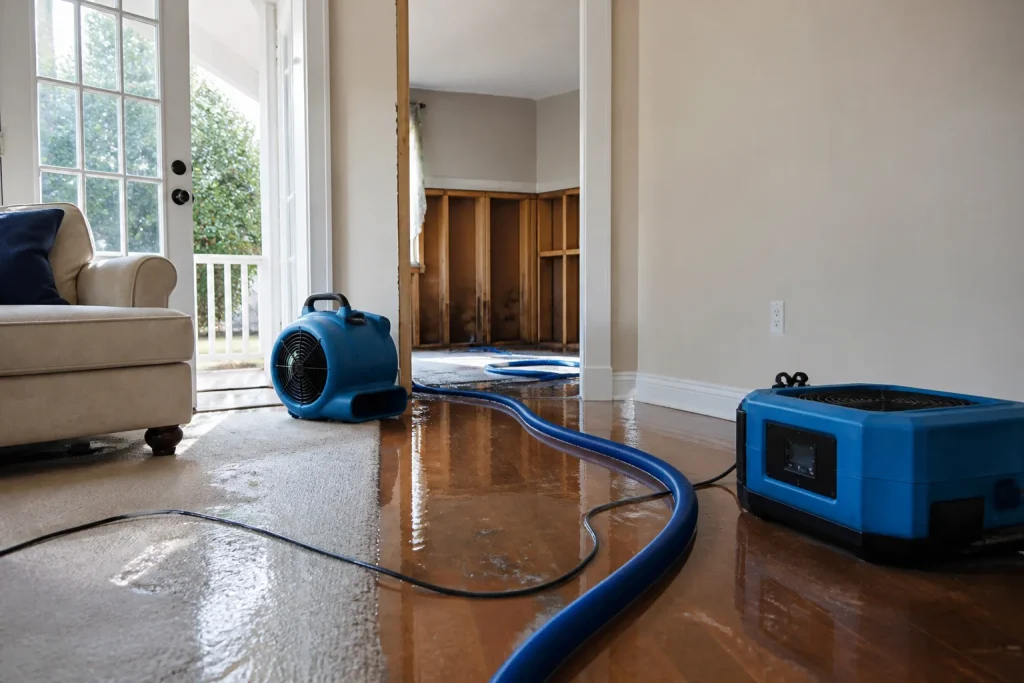
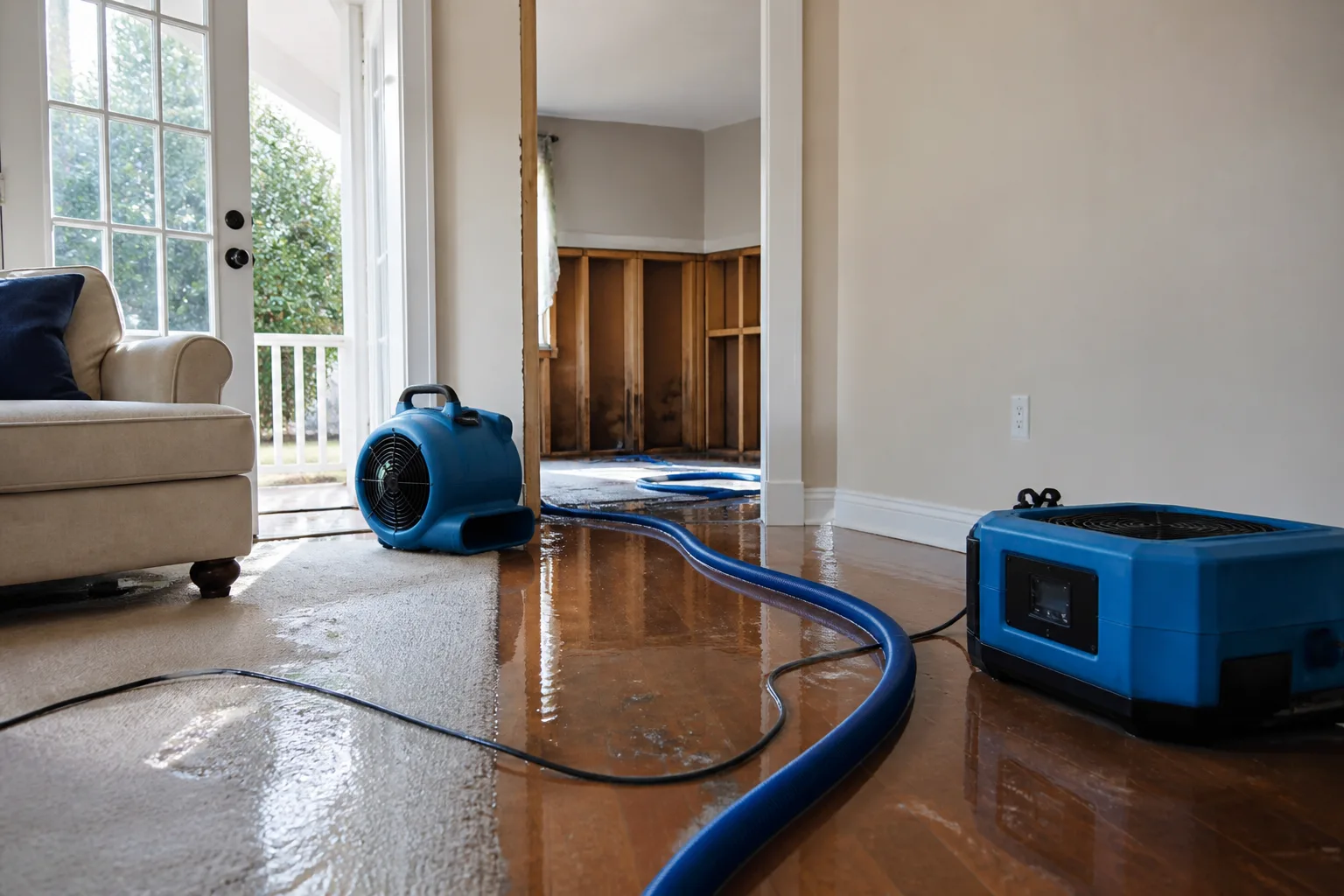
- Psychrometric readings. We measure temperature, relative humidity, and grains per pound of moisture in the air. These readings tell us whether the drying chamber is actually working or just moving wet air around. You’d be surprised how often we find fans running in a room where the humidity never dropped.
- A moisture log. Every day, we re-test and log. The homeowner gets a copy. The carrier gets a copy. Nobody has to ask “is it dry yet?” because the numbers answer the question.
This is not optional paperwork. RIA standards are the baseline for what constitutes a professionally dried structure. A crew that skips the log is guessing.
Insurance Carriers Cross-Reference ANSI/IICRC S500 and RIA Standards
Insurance carriers don’t just write checks. They review drying reports against two standards: the ANSI/IICRC S500 (the technical standard for water damage restoration) and RIA’s certification requirements. If your contractor’s report doesn’t reference drying goals or psychrometric data, the carrier flags the claim. Then the payment dispute starts.
We’ve seen this happen repeatedly in White Plains, especially with older homes. A homeowner gets a non-certified crew to dry a basement. The crew runs fans for four days, says “looks dry,” and sends a bill. The adjuster asks for the moisture log. There isn’t one. The claim stalls. The homeowner is now on the phone with an adjuster, playing messenger between two parties who don’t trust each other.
That’s the part we handle differently. Floodline Restoration Co. home bills the carrier directly and sends the documentation with the invoice. The moisture log, the drying goals, the equipment placement diagram. All of it. When the carrier sees RIA-compliant paperwork attached to the claim, the review moves faster. That’s not a promise of approval. It’s just how the process works.
RIA Member vs. RIA-Credentialed Crew: The Difference Matters
Here’s a detail most contractors would rather you skip. Being an “RIA member” is not the same as having an RIA-certified crew. Membership is a directory listing. Certification means individual technicians passed exams and completed continuing education. One is a checkmark. The other is a skill standard.
Ask the company this question: “Are your technicians individually RIA-certified, or is the company just a member?” Watch the pause. A company whose crew actually holds credentials answers immediately. A company hiding behind a membership badge will stammer.
At Floodline Restoration Co., our technicians hold IICRC and RIA certifications and train to IFA standards for structural drying. They’re background-checked, uniformed, and show up with the same crew from day one to final walkthrough. The person reading the moisture map on Monday is the same person handing you the completed log the following week. That continuity matters when you’re trying to understand why the numbers moved the way they did.
Why White Plains Housing Stock Makes RIA Certification Non-Negotiable
White Plains is not a new-construction market. A lot of the housing stock in neighborhoods like Battle Hill, Fisher Hill, and Prospect Park dates to the 1920s through 1960s. The basements are often stone or block foundation with original framing. The soil here leans clay-heavy, which means water doesn’t drain away from foundations quickly. It sits. It finds the path of least resistance, which is usually your basement wall.
Older framing responds differently to moisture than modern engineered lumber. Original hardwood floors cup faster. Plaster walls hold humidity longer. A crew that treats a 1935 White Plains colonial like a 2015 Toll Brothers build will set drying goals that are wrong from the start. The structure might look dry on the surface while the wood framing inside the walls is still at 18% moisture content. Mold follows.
RIA protocol accounts for this. The drying goals change based on the materials, not a generic template. That’s why certification matters more here than in a development where every house has the same dimensions and the same building envelope.
What to Ask for Before Signing Any Restoration Agreement
You don’t need to be a restoration expert to protect yourself. You need to ask for three documents before any work starts. If the company hesitates, call someone else. Here’s what to ask to see:
- The drying goals sheet. This should list every affected room and material, with target moisture content for each. If they can’t produce it before starting, they don’t have one.
- The equipment placement diagram. Where each air mover goes, where each dehumidifier sits, and why. RIA protocol requires this. A company that says “we’ll figure it out on site” is not following the standard.
- The daily moisture log format. Ask what the log will look like. It should show readings from day one through dry standard. If the answer is “you don’t need to see that,” walk away.
We pulled a job out of a garage in Gedney Farms last month where the previous contractor had run fans for six days but never opened the wall cavities. The drywall was dry. The framing was soaked. The homeowner found out when the baseboards started swelling. Ask for the log. It would have caught that on day two.
When to Call a Pro
Here’s the honest line. If the water came from a supply line and you caught it within an hour, you might be okay with towels and a shop vac. If it came from a drain line, a sump pump failure, or sat overnight, call a pro. Sewage and gray water carry bacteria. Wood framing starts wicking moisture within hours. And if you can already smell must, mold is already active.
Related services in White Plains: if you’re dealing with water damage, check what we cover on Mold Remediation in White Plains. And if the water came after a kitchen fire, our Fire & Smoke Damage Restoration in White Plains page explains how soot and water interact during cleanup.
The Bottom Line
RIA certification is not a logo. It’s a documented drying standard that protects your insurance claim and your home’s structure. In White Plains, with older housing stock and clay-heavy soil, the margin for error is thinner than in newer markets. Ask for drying goals, a moisture log, and an equipment diagram before signing anything. If the company can’t produce them, you’re taking a risk you don’t need to take.
If you’re in White Plains and need help, Floodline Restoration Co. offers free estimates. We’ve been serving Westchester County since 2010, with a live dispatcher answering the phone 24/7. Call (914) 359-3773 and a person picks up.
Frequently Asked Questions
RIA stands for the Restoration Industry Association, the trade organization that sets certification and drying protocol standards for water damage restoration companies. RIA certification requires documented drying goals, psychrometric readings, and daily moisture logs on every job.
Most homeowners policies cover sudden and accidental water damage, like a burst pipe or a failed supply line. Gradual leaks and flood damage are typically excluded unless you have a separate flood policy. Your restoration contractor’s documentation plays a big role in whether the claim gets approved. Call (914) 359-3773 and we’ll walk you through what your carrier will likely require.
Floodline Restoration Co. has a live dispatcher answering calls 24/7. A certified crew usually reaches the job the same visit, with extraction running before the end of the day in most cases. The faster extraction starts, the less structural damage and mold risk you face.
Fans alone don’t dry a structure. They move air, but without dehumidification and documented moisture readings, you’re guessing. RIA-certified drying sets measurable goals for every material and logs readings until those goals are met. In White Plains’ older homes, guessing wrong means mold inside the walls. Call (914) 359-3773 for a free assessment.
Written by Curt Bowman, Owner at Floodline Restoration Co., serving White Plains since 2010.
Need Damage Restoration Help?
Call Floodline Restoration Co. - licensed & insured, here with fast after-hours help in White Plains.
(914) 359-3773