
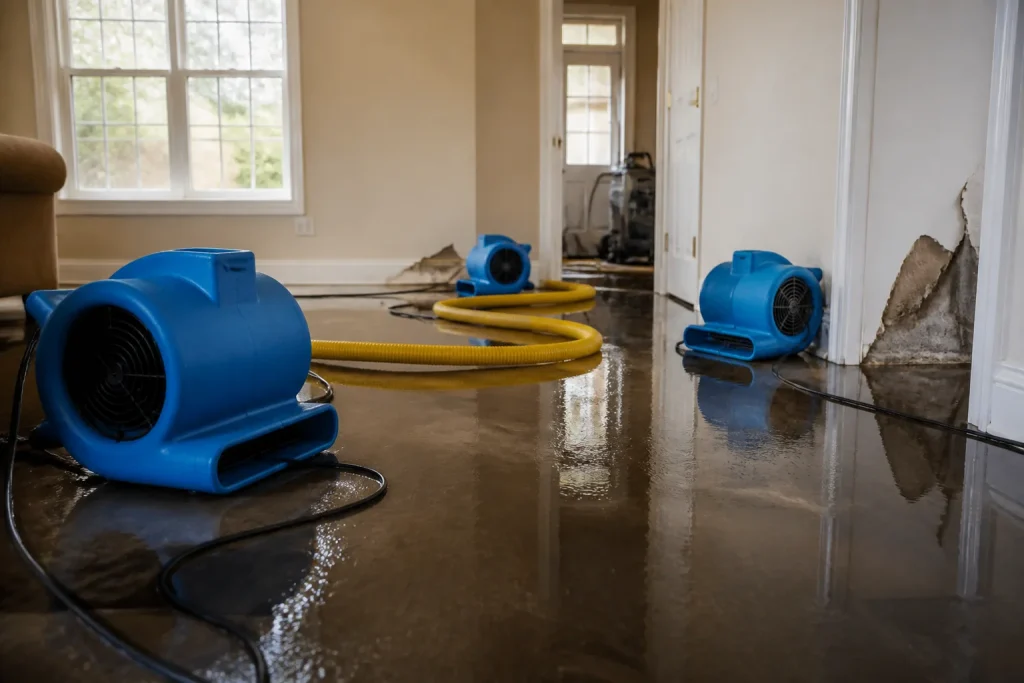
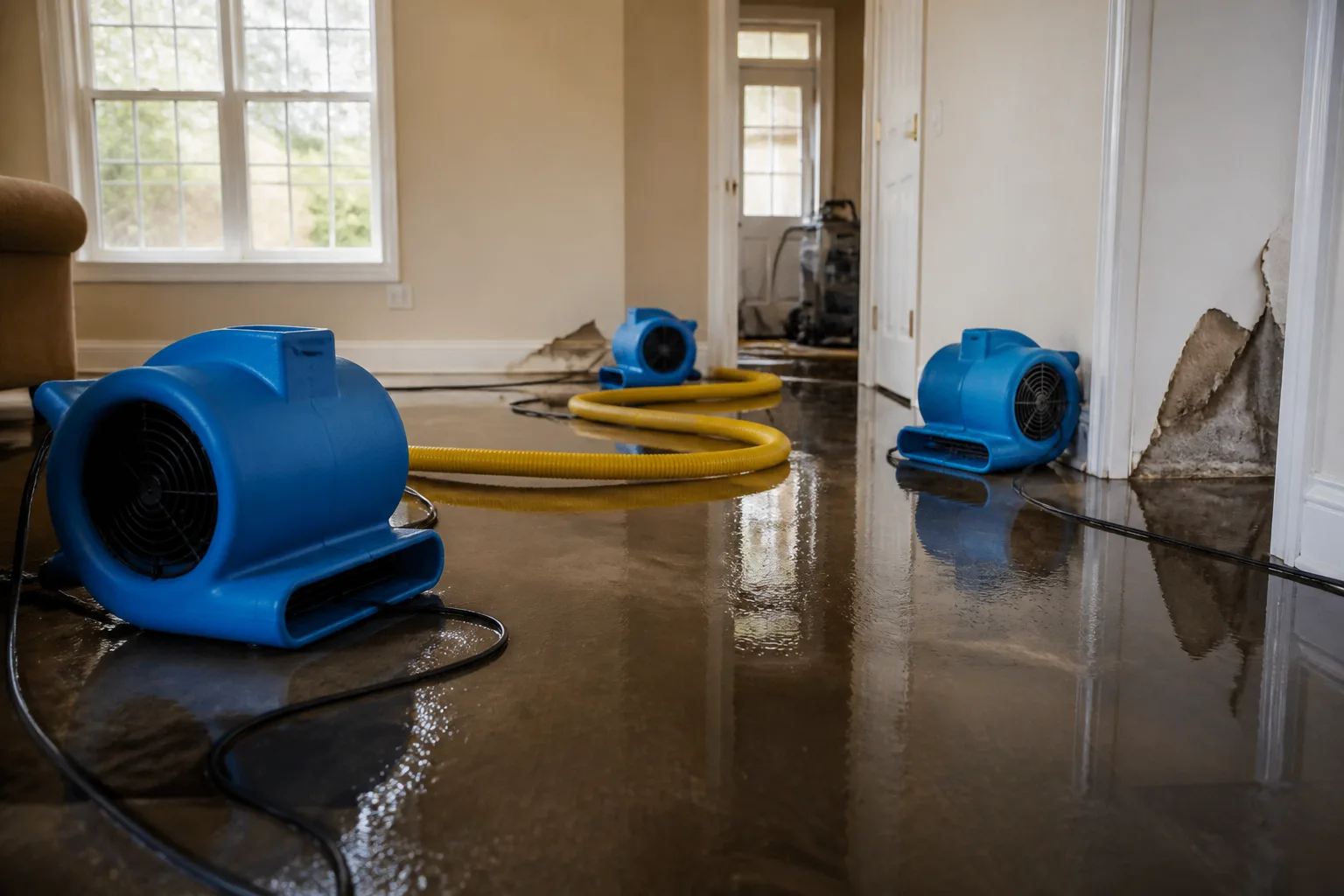
How to Choose the Right Damage Restoration Company in White Plains
Choosing the right damage restoration company in White Plains comes down to one question: will the same crew that shows up on day one be there when the last piece of trim goes back on the wall? Credentials matter, but job continuity matters more. If you’re comparing companies right now and want to skip the research, call Floodline Restoration Co. home at (914) 359-3773 for a free estimate.
We’ve spent over 42 years in this trade, and here’s what we know: a contractor can hold every legitimate certification in the industry and still leave your home half-finished. Certifications verify training. They don’t verify whether one crew will see your job from the flood line to the finished wall. That’s the real risk, and it’s the thing most homeowners don’t know to ask about.
The Certification Trap: Why Credentials Alone Don’t Protect You
The most dangerous restoration contractor in White Plains isn’t the unlicensed one operating out of a pickup truck. It’s the fully certified mitigation company that extracts the water, sets up drying equipment, collects a check from your carrier, and then hands you a list of “preferred reconstruction partners” before disappearing. You’re left holding a moisture log you don’t know how to read and a house with open walls, playing unpaid project manager between two companies that don’t answer to each other.
Look for a company where IICRC certification applies to the same crew that handles reconstruction. IICRC training covers water damage and applied structural drying. RIA certification covers restoration industry standards. Those matter, but only if the company uses them across the full job, not just the emergency phase. Ask this directly: “Does your crew handle rebuild, or do you subcontract it?” If the answer involves a partner or a referral, ask who holds the liability for the finished wall. If the answer is unclear or shifts to the other company, walk away.
We train our technicians to IICRC, RIA, and IFA standards, and we keep the job under one roof, from first extraction to finished rebuild. Same crew, same accountability, same phone number.
Read the Contract for the One Clause That Reveals Everything
There’s a single contract clause that tells you whether a restoration company in White Plains does full-cycle work or plans to hand you off. It’s the “scope of work” section, or sometimes buried under “subcontractors and delegation of work.” Here’s what to look for:
- Who performs reconstruction? The contract should name the company you signed with as the party responsible for rebuild, not “qualified affiliates” or “licensed partners.”
- Who supervises subcontractors? If subcontractors are allowed, does the contract state the restoration company supervises them and remains liable for their work?
- Who holds the license and insurance? The contracting party’s name on the permit should match the name on your contract. If not, you’re hiring someone who’s hiring someone you’ve never met.
- What does “substantial completion” mean? Vague definitions let contractors declare the job done before the paint dries. Ask for a written definition tied to specific dry standards and finish work.
Curt Bowman started this company in 2010 because he kept seeing the same failure pattern: homeowners in White Plains signed with one contractor and ended up with three. The contract is where that failure starts, and it’s where you prevent it.
“Locally Owned” Means Something Different in Westchester
Every restoration company claims to be local. But in Westchester County, local ownership has real, checkable meaning. A company with permanent operations in White Plains carries local liability insurance, pays local property taxes, and has a business address you can drive past. That matters when a nor’easter or a summer storm surge hits the region and dozens of out-of-state crews flood in from Connecticut, New Jersey, and Pennsylvania.
Here’s what permanent local operations actually gets you:
- Local permitting knowledge. White Plains has its own building department, permit requirements, and inspection process. A company that works here year-round knows what triggers a permit and how to schedule inspections without stalling your job.
- Accountability after the storm. A contractor who plans to be in White Plains in thirty years answers the phone after the regional rush dies down. The out-of-state crew that swept in for storm work is gone by the time your drywall bubbles.
- Local references you can verify. Drive past a job they did last year. Talk to neighbors. A company with a shop in the area has a reputation attached to an address.
We’ve been in White Plains since 2010, built around a dispatch board, not a sales desk. That’s not marketing copy. It’s how Curt set the company up, and it’s why a live dispatcher picks up at 2 a.m., not a recording.
Ask to See a Sample Moisture Log Before You Hire
This is the vetting question almost nobody asks, and it’s the one that separates legitimate restoration companies from marketing shells: ask to see a sample moisture log and an explanation of the drying goals they use. Any company claiming to do proper Water Damage Restoration in White Plains should be able to show you one without hesitation.
A real moisture log tracks daily readings from affected materials against a target dry standard, typically the moisture content of an unaffected area in the same structure. The company should be able to explain what readings they take, where they take them, and what “dry” means for different materials. Drywall dries to a different standard than hardwood floor joists. Carpet underlay dries to yet another standard. If the person you’re talking to can’t explain that, they’re not the person running your job.
We run daily readings using Dri-Eaz, Phoenix, and Injectidry equipment, and we hand the completed log to the homeowner and the carrier before the rebuild starts. No guessing. No “trust us, it’s dry.” The numbers go to you.
The Insurance Billing Question Most Homeowners Forget to Ask
Here’s a scenario we see constantly in White Plains: a homeowner files a claim, the adjuster comes out, and the restoration company hands the homeowner an invoice and says, “Submit this to your carrier, they’ll reimburse you.” The homeowner pays out of pocket, waits weeks for reimbursement, and discovers the carrier disputes half the line items. Now the homeowner is fighting an insurance company on their own, with no leverage and no advocate.
The question to ask before you sign anything: “Do you assign benefits and bill my carrier directly, or do I pay upfront and wait for reimbursement?” Direct billing means the restoration company documents the damage, gets carrier approval on scope, performs the work, and bills the carrier directly. You’re not the payment processor. You’re the homeowner.
Ask a second question too: “Who talks to my adjuster?” If that person is you, you’ve just been hired as an unpaid project manager. A restoration company that handles Fire & Smoke Damage Restoration in White Plains correctly should coordinate directly with your adjuster, document the damage in the carrier’s required format, and advocate for the full scope of work.
We handle direct insurance billing on every job. The homeowner never plays messenger between us and the carrier. That’s how it should work, and it’s one of the reasons we put the 90-Day Done Right Promise in writing on every single job.
What a Written Guarantee Should Actually Say
“Satisfaction guaranteed” is not a guarantee. It’s three words that mean nothing when drywall bubbles six weeks after the crew leaves and the phone number on the invoice no longer rings. A real guarantee has three specific components:
- Duration. How long does the guarantee last? Ours is 90 days, and it’s written into every contract. If it’s not done right, we make it right. No arguing.
- Scope of covered defects. What exactly is covered? Does it cover the drying work, the rebuild work, or just the extraction? If drywall cracks, cabinet doors warp, or paint peels, is that covered? Ask for the list in writing.
- Who to call. The guarantee should name a person or a phone number, not a generic “contact customer service” line. When something goes wrong at 7 p.m. on a Thursday, you should know exactly who answers.
The guarantee we use is called the 90-Day Done Right Promise. Internally, we call it the Keystone Standard, and it’s tied to a values code: Krafted right, Every time, Your home first, Standing behind it. Every technician knows it. Every contract includes it. Every homeowner gets it in writing.
How to Shortlist Restoration Companies in White Plains: A Practical Checklist
Here’s the short version of everything above. Write these questions down and ask every company the same ones:
- “Does your crew handle rebuild, or do you hand it off?” If the answer involves another company, ask who holds liability for the finished work.
- “Can I see your contract language on subcontractors?” Read it before you sign. Look for the name of the company you’re hiring as the responsible party for all phases.
- “Can you walk me through a sample moisture log?” If they hesitate or can’t explain drying goals, that’s your answer.
- “Do you bill my insurance carrier directly?” If the answer is no, factor in the time and stress of self-advocating against your own carrier.
- “What exactly does your guarantee cover, and for how long?” Get the answer in writing. Vague language isn’t a guarantee.
- “Who answers the phone at 2 a.m.?” Emergency water damage doesn’t wait for business hours. If the answer is a voicemail, keep looking.
One more thing worth saying: in our experience, the best restoration company for your home is the one that answers these questions clearly, without hedging, and without talking you in circles. The worst one is the one that gets defensive. A legitimate operator has nothing to hide. We pulled a Mold Remediation in White Plains job a while back where the homeowner told us the previous company refused to show her the moisture readings when she asked. That company is no longer in business. The homeowner’s wall is now dry, tested, and rebuilt, because she asked the right question and didn’t like the answer she got.
The Bottom Line
Choose a restoration company in White Plains the way you’d choose a surgeon: you want credentials, yes, but you also want the same hands on the job from start to finish. Ask about rebuild continuity, read the subcontractor clause, demand a sample moisture log, confirm direct insurance billing, and get the guarantee in writing with a real duration and a real phone number. Those five questions filter out the expensive mistakes before they start.
If you’re in White Plains and dealing with water damage, mold, fire, or storm damage, Floodline Restoration Co. offers free estimates. We’ve served White Plains since 2010, we answer the phone with a live person at any hour, and every job is backed by the 90-Day Done Right Promise in writing. Call (914) 359-3773 and we’ll be there when we say.
Frequently Asked Questions
Ask for a physical address in or near White Plains and drive past it. Check the contracting license and insurance policy to confirm the company name on your contract matches the name on those documents. A company with permanent local operations carries local liability insurance and knows White Plains permit requirements. Out-of-state storm chasers don’t, and they’re usually gone by the time problems surface.
You can, but verify them the same way you’d verify any other contractor. The carrier’s preferred list often includes companies that are fast to respond but may split mitigation from rebuild. Ask the same questions: who handles reconstruction, who bills whom, and what does the guarantee cover in writing? You have the right to choose your restoration company, not just accept a referral.
Mitigation is the emergency phase: extraction, drying, and preventing further damage. Reconstruction is the rebuild: drywall, flooring, paint, trim. Many companies do mitigation only and hand the rebuild to a separate contractor. That handoff is where homeowners get stuck between two companies and an insurance carrier, with no one accountable for the finished result. Full-cycle companies handle both phases with the same crew and the same written guarantee.
Ask for the daily log and an explanation of the drying goals for each affected material. If the company can’t explain why readings are stalling or refuses to show you the numbers, get a second opinion from a certified restoration company in White Plains. A legitimate operator will walk you through the readings and adjust the drying plan. Call (914) 359-3773 for a free assessment if you’re not getting straight answers.
Written by Curt Bowman, Owner at Floodline Restoration Co., serving White Plains since 2010.
Need Damage Restoration Help?
Call Floodline Restoration Co. - licensed & insured, here with fast after-hours help in White Plains.
(914) 359-3773