
Water Damage Restoration What It Really Costs: What White Plains Homeowners Pay in 2026
Most White Plains homeowners will pay between $3,800 and $16,500 for full water damage restoration in 2026, depending on the water category and how much rebuilding the job requires. That range is wide because two quotes for the same flooded basement often cover two completely different endpoints. One stops at drying; the other includes putting your walls back. If you’d rather not sort through the fine print yourself, call (914) 359-3773 and we’ll walk you through exactly what your job needs.
The $4,200 Quote and the $14,800 Quote Can Both Be Honest
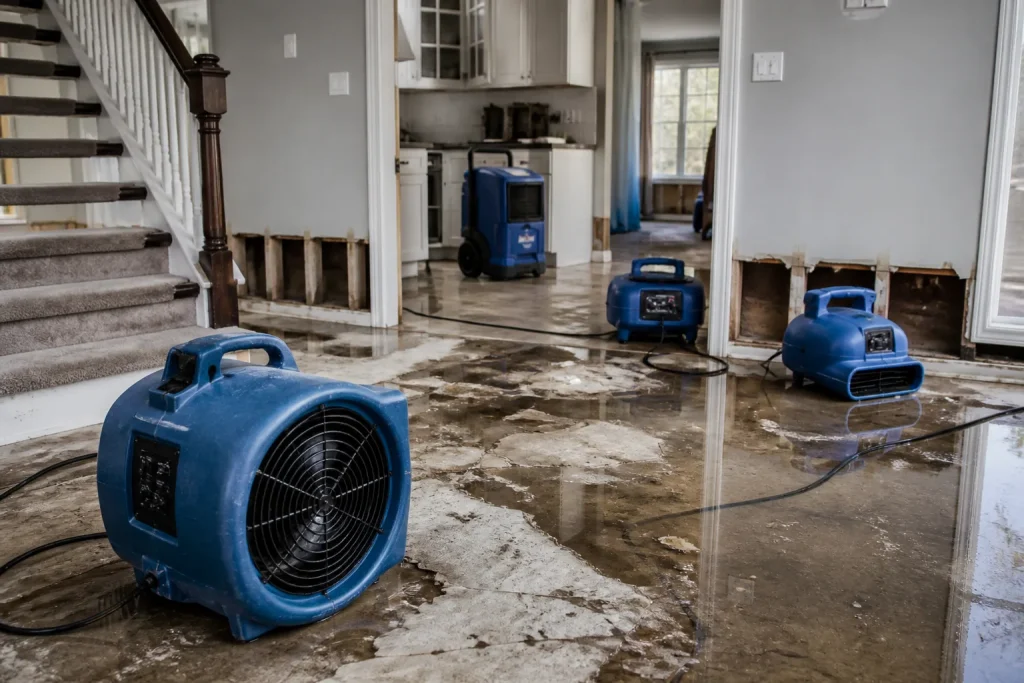
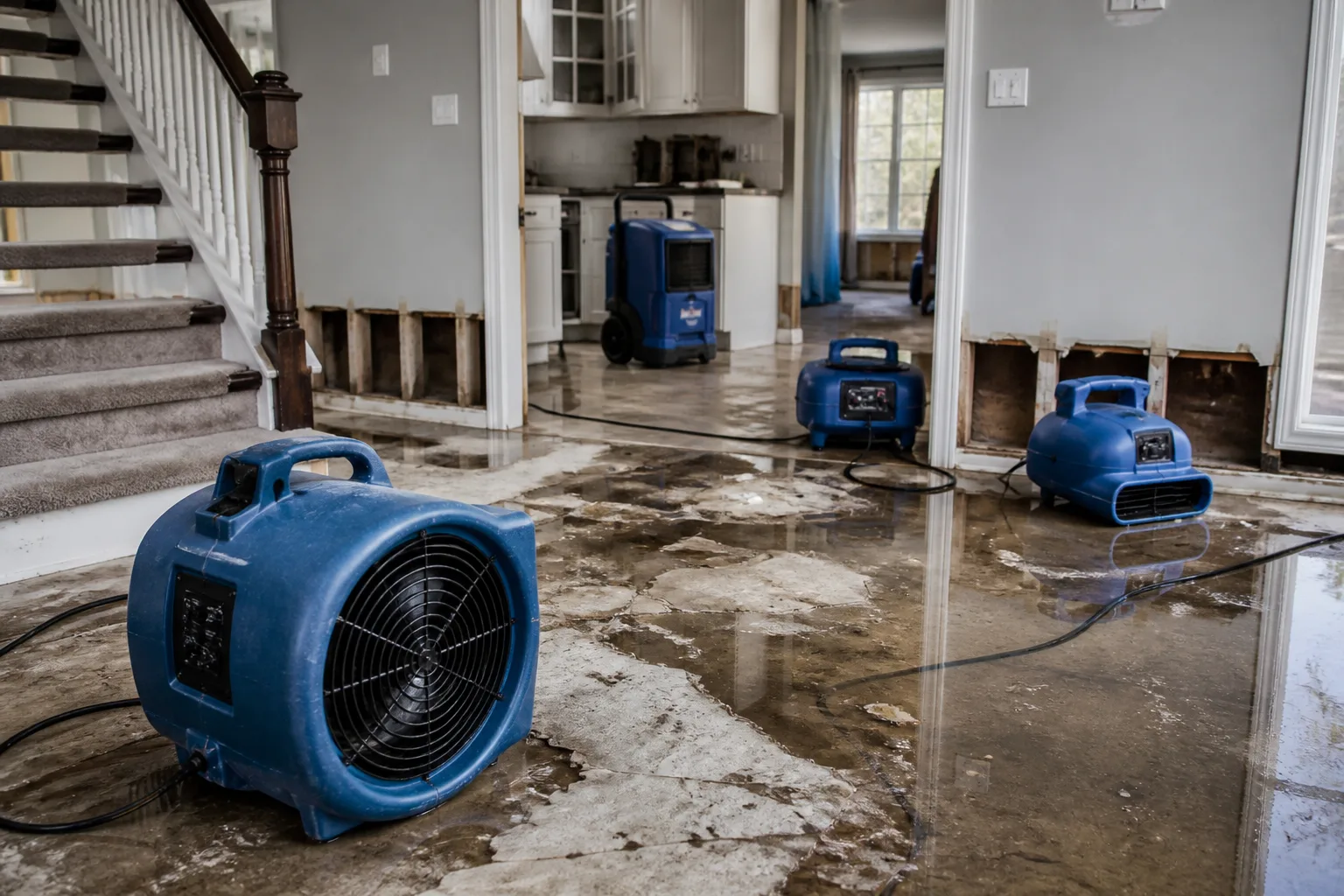
A homeowner in the Highlands neighborhood of White Plains calls two companies about a flooded finished basement. Company A quotes $4,200. Company B quotes $14,800. The homeowner assumes someone is gouging. In most cases, neither is. Company A is quoting mitigation only: extract the water, set up drying equipment, monitor moisture until it meets the dry standard, then leave. Company B is quoting mitigation plus reconstruction: extraction, drying, tear-out of wet drywall and insulation, and rebuild to the condition it was the day before the pipe burst.
This split between mitigation and reconstruction pricing is the single biggest reason White Plains homeowners get surprised by a second bill. The industry has quietly normalized two-phase contracts. A mitigation company comes in, does the emergency work, writes a separate report for the insurance carrier, and then tells you to find a general contractor for the rebuild. You are now the project manager between two companies, and the number you were quoted at 3 a.m. was never the number it would cost to make the room livable again.
At Floodline Restoration Co. home, we price the whole job from the first visit. The crew that extracts the water is the same crew that hangs the drywall. That is not a convenience. It is the difference between a quote you can trust and a quote that is honestly just the first installment.
What White Plains Homeowners Pay by Water Category in 2026
The IICRC classifies water damage into three categories, and each carries a different price because each carries a different level of contamination and required disposal. Here is what we are seeing across White Plains in 2026, including the neighborhoods around Mamaroneck Avenue, Battle Hill, and North Broadway.
Category 1: Clean Water
This is water from a broken supply line, an overflowing bathtub, or a failed water heater. It is clean at the source. If caught within 24 to 48 hours, most materials can be dried in place without demolition.
- Mitigation (extraction, drying, monitoring): $3.50 to $5.50 per square foot of affected area
- Typical 500 sq ft basement: $2,200 to $3,800
- With rebuild (if drywall or flooring is damaged): $6.00 to $9.00 per square foot
- Full restoration on 500 sq ft: $4,500 to $7,200
In our experience, most Category 1 jobs that are caught early do not require much rebuild. The drying equipment does its job, and you are back to normal within three to five days. The key is speed. Every hour that clean water sits in drywall wicks upward, and what started as a $2,500 mitigation job becomes a $6,000 rebuild.
Category 2: Grey Water
This is water from washing machines, dishwashers, or sump pump failures that has sat long enough to grow bacteria. It is not sewage, but it is not clean. White Plains homes with older washing machines on second floors see this more than any other type. The water runs down through the floor joists and sits in the ceiling cavity before anyone notices the stain.
- Mitigation: $4.50 to $7.00 per square foot
- Typical 300 sq ft ceiling/wall job: $3,000 to $4,800
- Disposal of contaminated drywall and insulation: $0.80 to $1.20 per square foot added
- Full restoration with rebuild: $7.50 to $12.00 per square foot
Category 2 requires more aggressive drying and often partial demolition. The difference is not just labor; it is disposal. Westchester County has specific requirements for disposing of water-damaged building materials, and those hauls cost more than a standard dump run.
Category 3: Sewage and Floodwater Intrusion
This is the most expensive category, and it is the one where quotes vary the widest. Category 3 water contains pathogens. Every porous material it touches must be removed. That includes drywall, insulation, carpet, pad, and sometimes subflooring. A sewage backup in a White Plains basement on a street with older clay pipes is a Category 3 job.
- Mitigation and full demo: $6.00 to $9.50 per square foot
- Antimicrobial treatment and disinfection: $1.50 to $3.00 per square foot
- Rebuild: $8.00 to $15.00 per square foot depending on finishes
- Typical 500 sq ft finished basement, full cycle: $9,500 to $16,500
If a quote for a Category 3 job comes in under $5,000 for a finished basement, read the scope carefully. It is almost certainly mitigation only. And on a sewage job, leaving the rebuild to a different contractor means the person hanging your new drywall did not see the moisture map from day one.
Why White Plains Prices Run Higher Than National Averages
Most online cost guides cite national averages. Those numbers do not reflect what a homeowner in Westchester County actually pays. Here is what adds cost in White Plains specifically.
Labor rates. Restoration technicians in Westchester earn more than the national average. The IICRC-certified crews working in White Plains are paid accordingly, and the companies that hire them carry workers’ compensation, background checks, and ongoing training. Those costs are in your quote.
Permit fees. The City of White Plains requires building permits for structural rebuilds and for any electrical or plumbing work tied to restoration. A Category 3 basement rebuild that requires new subfloor framing will need a permit. Permit fees vary by scope, but restoration companies in White Plains routinely add $300 to $900 per project in permit costs, depending on the city’s schedule.
Material costs. Drywall, insulation, and flooring all cost more in Westchester than in most of the country. Supply runs are shorter, but the suppliers pay Westchester rents and wages, and that flows through.
Disposal and hauling. Westchester County regulates construction and demolition debris. Category 3 materials cannot go into a standard roll-off. They require separate handling and documentation, which adds $200 to $600 per job.
When you see an online guide that says water damage restoration averages $3,000 to $4,000 nationally, understand that number would be a clean Category 1 mitigation on a small area in a low-cost market. It is not the number for a finished basement in White Plains.
The Line Items You Should Demand on Any Estimate
Before any work begins, ask the contractor to put these items in writing. If they will not, walk away. A two-line contract that says “extraction and drying: $4,200” is how homeowners end up with a second bill they did not expect.
- Equipment day-rates. Drying equipment is billed per day, not per job. An estimate should list how many air movers and dehumidifiers will be placed, at what day-rate, and for how many expected days. We use Dri-Eaz and Phoenix equipment, and the day-rates are specific numbers in our quotes.
- Moisture monitoring fees. Daily readings are part of the job. Some companies bury this as an administrative fee. Ask for it as a line item. We log readings every visit and hand the moisture log to you and your carrier at the end.
- Disposal and hauling. This should be a separate line with a separate cost. If it says “included,” ask what happens if there is more debris than expected.
- Demolition scope. Exactly which walls, how high up the wall, and what flooring comes out. Category 3 jobs require 2 feet above the waterline in many cases. That is a specific measurement, not a judgment call made halfway through the job.
- Rebuild scope. This is the big one. Does the estimate include drywall, insulation, paint, trim, and flooring? If the word “rebuild” is not on the estimate, you are looking at a mitigation-only quote.
When we walk a water damage job in White Plains, the estimate we hand over includes all of this. No-hassle upfront pricing with direct insurance billing means the number you see is the number the job costs, and we do not make you play messenger between us and the carrier.
How Direct Insurance Billing Works - and Where It Goes Wrong
Many White Plains homeowners assume every restoration company bills insurance directly. That assumption is expensive when it is wrong. Here is the difference.
A contractor who bills your insurance carrier directly submits the claim documentation, the moisture log, the photos, and the scope, and works with the adjuster to agree on a number. You are not writing a check and hoping for reimbursement. The carrier pays the contractor, you pay your deductible, and the job moves forward.
A contractor who does not bill insurance directly sends you the full invoice. You pay it, then you file the claim and wait. If the carrier disputes the scope or the rates, you are now in a dispute between your insurance company and a contractor who already has your money. This is called balance billing, and it is where homeowners get hurt. The contractor has no incentive to negotiate with the carrier because the contractor is already paid.
We bill insurance directly. We send the carrier the same photos, the same moisture log, and the same written scope we hand you. If the adjuster has questions, they call us, not you. The 90-Day Done Right Promise is in writing, and it does not depend on who signed the check. That is the way it should work.
When to Call a Pro
If water is from a broken supply line and you caught it within an hour, you might be able to handle the mop-up yourself and run fans. But the moment water has sat in drywall or carpet for more than a few hours, you need a professional with a moisture map and commercial drying equipment. Drywall is a sponge. It wicks water upward, and what looks like a two-foot stain at the base is often wet three feet up inside the wall cavity. You cannot see that without a moisture meter, and you cannot dry what you cannot see.
If the water is from a sewage backup, a washing machine overflow that sat overnight, or any floodwater that touched the foundation, do not try to clean it yourself. Category 3 water requires personal protective equipment and proper disposal. It is not a homeowner-level job.
For related services, see our Water Damage Restoration in White Plains page, or if the water has been sitting long enough to grow mold, read about Mold Remediation in White Plains. If the damage came from a fire suppression system or a kitchen fire, our Fire & Smoke Damage Restoration in White Plains page covers that scope too.
The Bottom Line
The number that matters is not the quote you get at 2 a.m. The number that matters is the cost to put your house back the way it was. In White Plains in 2026, that number runs from $3,800 for a small clean-water job to $16,500 for a full sewage remediation and rebuild on a finished basement. The way to avoid a second bill is to demand a written scope that includes rebuild, equipment day-rates, moisture monitoring, disposal, and the warranty. If a contractor will not put that in writing, find one who will.
If you’re in White Plains and need help, we offer free estimates. Call (914) 359-3773 and a live person will answer, day or night. We have been doing this since 2010, and we stand behind every job in writing.
Frequently Asked Questions
Most White Plains homeowners pay between $3,800 and $16,500 for full-cycle water damage restoration, depending on the water category and rebuild scope. Category 1 clean water jobs run $2,200 to $3,800 for mitigation on a typical 500 sq ft basement; Category 3 sewage jobs with full rebuild run $9,500 to $16,500. Call (914) 359-3773 for an exact quote based on your footage.
Most homeowner policies cover sudden and accidental water damage from burst pipes, appliance failures, or storm water, but not from long-term leaks or neglected maintenance. Coverage depends on your specific policy and the cause of the loss. We bill insurance directly and coordinate with your adjuster, so you are not stuck negotiating while your walls stay wet. Call (914) 359-3773 and we can review your situation.
A live dispatcher answers our phones 24/7, and a certified crew reaches most White Plains addresses within 90 minutes to 2 hours depending on traffic. The same visit includes extraction startup, which is the single most important step for limiting damage. Call (914) 359-3773 and a person picks up.
The second bill happens when a company quotes mitigation only: extraction, drying, and monitoring. The rebuild phase, including drywall replacement, insulation, paint, and flooring, was never in the original quote. That is why the first number looked low. We quote the full cycle from the first visit, so the number you agree to is the number the job costs. Call (914) 359-3773 and ask for a written scope.
Written by Curt Bowman, Owner at Floodline Restoration Co., serving White Plains since 2010.
Need Damage Restoration Help?
Call Floodline Restoration Co. - licensed & insured, here with fast after-hours help in White Plains.
(914) 359-3773